Technology has always changed the way designers work. What feels different now is the pace.
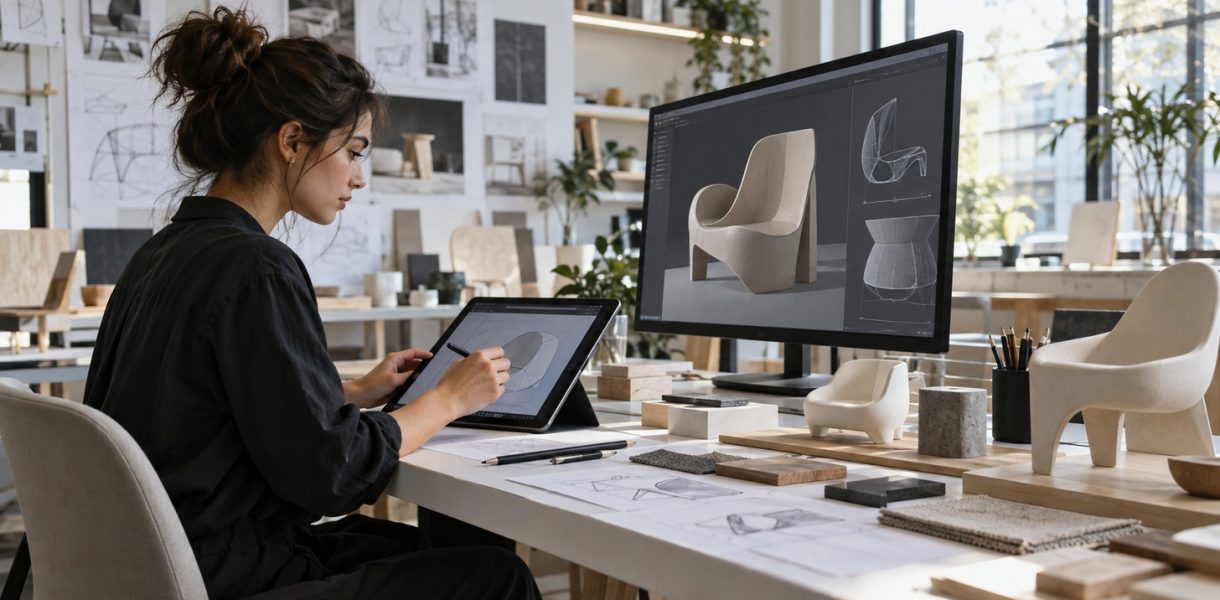
A sketch can become a detailed 3D model in hours. A client can walk through a space before anything is built. A building model can stay connected to live information after construction. And at the earliest, more exploratory stage, tools such as GenRoom can turn a photo into a quick visual take on how a room, facade, or outdoor space might look in a different style.
That kind of instant visualization sits alongside more established tools such as rendering software, BIM, VR, and physical models. Each serves a different purpose. Some help teams resolve technical questions; others make it easier to test a direction before spending much time developing it.
The tools are faster, and the process is more connected. The bigger change is that teams can test more ideas before they commit to one.
From ideas to something you can experience
Design usually starts with something unfinished — a conversation, a sketch, a reference image, a problem that still needs a shape.
Digital tools make that stage easier to explore. BIM gives architects and engineers a shared model instead of disconnected drawings. Real-time rendering shows how light, material, and scale may feel while the design is still changing. VR and XR can place a client inside a proposed space, making feedback more useful than looking at plans on a screen.
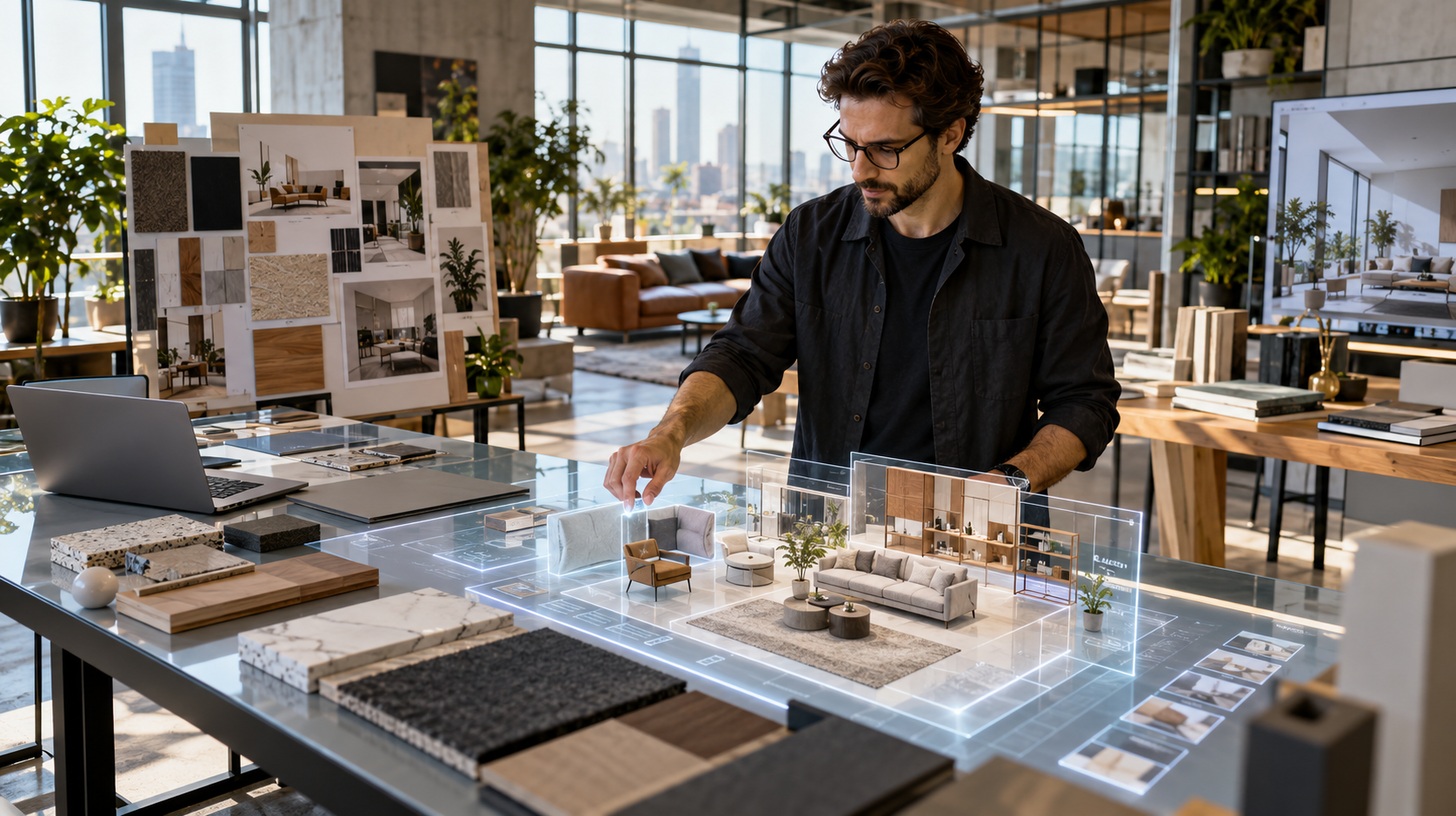
There is also a growing layer of more focused visual tools built around specific questions — AI bathroom design, room restyling, facade concepts, or landscape ideas. They occupy a different part of the process: less about resolving every technical detail, more about putting an early direction in front of someone while it is still easy to change.
Reality capture is changing the starting point too. Laser scanning and photogrammetry can turn existing buildings and sites into accurate digital models. Designers can work from what is actually there, not from assumptions.
Physical models still matter. So does 3D printing. A screen can show a polished image, but a model can reveal proportion, massing, and awkward relationships fast.
Faster does not always mean better
Modern software makes iteration cheap. A team can compare layouts, materials, lighting, structural options, or energy scenarios without rebuilding the project from scratch.
The same instinct shows up at a much lighter level too: a quick material swap, a rough layout test, or even a search like AI room design free can be a way to look at a direction before treating it as a decision.
Digital twins push this further. Instead of ending when construction ends, the model can keep receiving information from sensors and building systems. That creates a feedback loop between design, operation, and future changes.
The risk is obvious: when software can generate hundreds of options, quantity starts to look like progress.
It is not.
A photorealistic render can make a weak idea look convincing. A VR walkthrough can feel impressive while hiding practical problems. An AI image can suggest a beautiful atmosphere without understanding cost, code, structure, maintenance, or how the place will age.
Speed gives designers more chances to test. It does not remove the need to choose well.
AI is becoming part of the everyday toolkit
AI is moving deeper into creative software. Newer tools can do more than produce one image from a prompt. They can organize references, explore visual directions, edit assets, compare alternatives, and carry out multi-step tasks across a workflow.
For architects and designers, that is useful early in the process. AI can turn loose ideas into studies, generate variations, summarize project information, or surface patterns that would take longer to find manually.
It also changes what using software feels like. Instead of learning every command first, designers can increasingly describe an outcome in plain language and let an assistant handle part of the execution.
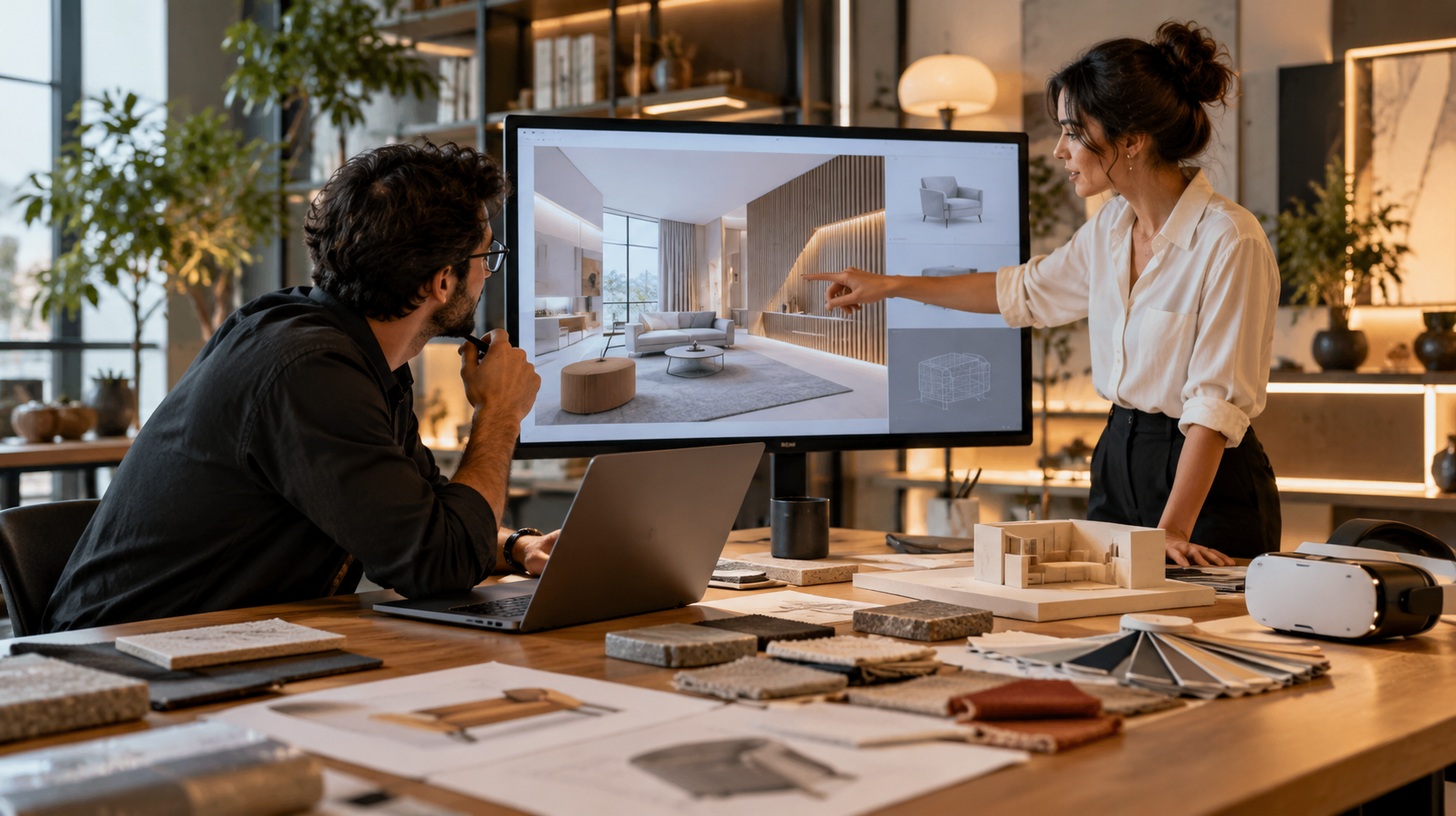
That saves time, but it changes the skill set rather than removing it. Someone still has to frame the problem, check the result, understand the context, and decide what is worth keeping.
AI is good at producing possibilities. Design is still about judgment.
Design still needs a human point of view
The most useful technology is rarely the one that creates the flashiest image. It is the one that helps a team understand the project better.
A client may struggle to explain what they want. A designer may sense that a space is wrong before they can explain why. An engineer may spot a conflict that changes the direction. Better tools make those moments easier to see and discuss.
The future of design will bring more automation, simulation, live data, and AI inside familiar software. The process may get faster, but good design will still depend on curiosity, context, taste, experience, and the ability to listen.
Technology can open more doors.
The designer still decides which one is worth walking through.